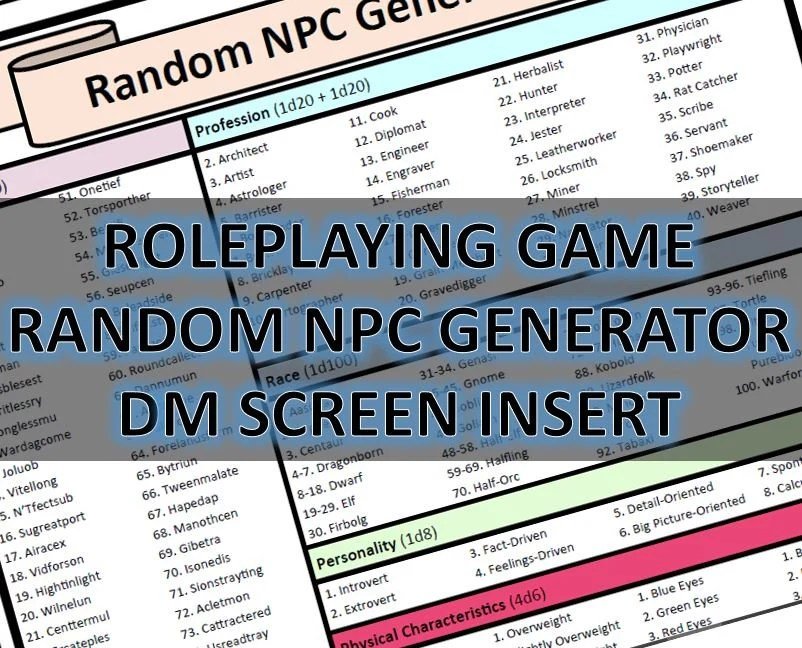
Ever found yourself staring blankly at your notes, desperately needing a new face for your D&D world, a quirky shopkeeper, or a menacing villain to throw at your players? You're not alone. Every Dungeon Master, from seasoned veterans to those just starting, eventually hits that wall. The good news? The solution isn't more endless prep. It's leveraging the incredible power of Random D&D NPC & Villain Generators. These digital alchemists (and sometimes analog dice rolls) are your secret weapon, transforming blank canvases into vibrant, memorable characters that breathe life and unpredictability into your campaigns.
This isn't about being "lazy"; it's about being smart. It's about enhancing your storytelling, fostering improvisation, and giving your players a truly dynamic, responsive world.
At a Glance: Power Up Your Campaigns with Generators
- Slash Prep Time: Instantly create detailed NPCs and villains, freeing you to focus on overarching plot.
- Spark Inspiration: Overcome GM's block with unexpected character hooks, names, and backstories.
- Enhance Roleplaying: Give players diverse, memorable personalities to interact with, enriching their experience.
- Boost Campaign Dynamism: Introduce plot twists and spontaneous encounters that keep everyone on their toes.
- Foster Inclusivity: Easily generate a diverse cast of characters across races, genders, and backgrounds.
- Develop Deeper Lore: NPCs can serve as invaluable sources of rumors, quests, and world-building details.
The DM's Best Friend: Why Generators Are Campaign Gold
Running a Dungeons & Dragons campaign is a monumental creative task. You're building worlds, designing encounters, managing rules, and most importantly, telling a compelling story. But often, the most vibrant elements of that story come from the people (and creatures) who populate it – the Non-Player Characters (NPCs) and the villains who stand in the players' way.
These are the unplanned characters, the spontaneous encounters, the quest givers, the minor antagonists, the friendly barkeepers, and the wise old hermits. They are the unpredictable elements that add depth and plot twists. And here's the kicker: you don't need to meticulously craft every single one from scratch.
The Unsung Heroes: Why Random NPCs Matter
Random NPCs fill your game world with life. They provide flavor through unique dialogues, unexpected interactions, and spontaneous plot threads. Think about it: a seemingly minor encounter with a grumpy old fisherman could reveal a crucial piece of lore about a local monster, or a chance meeting with a traveling bard could lead to an entirely new side quest.
These characters encourage flexibility and improvisation, turning what could be a static narrative into an organic, evolving adventure. They give weight to player choices, as an NPC's reaction to a party's actions can drastically alter how they are perceived in a town, leading to satisfying growth and emotional moments.
The Faces of Evil: Elevating Your Villains
While many generators focus on general NPCs, a good villain generator can be a game-changer. Villains aren't just bags of hit points; they're characters with motivations, flaws, and backstories that make their nefarious deeds understandable, if not forgivable. A randomly generated villain can inspire a truly unique antagonist you might never have conceived on your own – perhaps a seemingly benign merchant with a dark secret, or a misunderstood monster driven by a tragic past. This level of depth makes defeating them all the more rewarding and impactful for your players.
Anatomy of a Memorable Generated Character
What makes a randomly generated character truly useful and not just a throwaway name? It's the layers of detail that a good generator can provide, transforming a simple prompt into a living, breathing entity. Let's look at the essential components and how they weave together to create compelling figures.
The Core Elements: More Than Just a Name
Most effective generators go far beyond just a name. They provide a foundational sketch that you, the DM, can then flesh out.
- Name & Race: The basics, but crucial for immediate identity. A good name can hint at personality or origin.
- Occupation: What do they do? This immediately grounds them in your world and suggests their skills, social standing, and likely interactions. An herbalist, a mercenary, a scribe – each comes with inherent hooks.
- Physical Description: A few key details (height, build, distinguishing marks, clothing style) make them tangible. "Moderately tanned," "violet suit," "long golden beard" – these paint a picture.
- Personality Traits: Are they jovial, gruff, shy, boastful? This guides your roleplaying.
- Motivations & Ideals: Why do they do what they do? This is gold for creating depth and potential plot hooks. Do they seek revenge, artistic expression, or a good night's sleep?
- Flaws & Bonds: These are the human (or elven, or dwarven) elements. A flaw provides vulnerability and challenges, while a bond grounds them in the world, giving them connections and stakes.
- Backstory Snippet: A short tale of their past can explain their current state, motivations, or skills. "Former adventurer who lost her party" – instant empathy and a potential quest hook.
Consider Thalia Greenleaf, an Elf Herbalist. Her backstory as a "former adventurer who lost her party and settled in the local woods" provides immediate depth. Players seeking rare herbs might find themselves uncovering her tragic past, or even helping her retrieve a lost relic linked to her fallen comrades. This simple character, easily generated, becomes a fountain of potential adventure.
Beyond Personality: Integrating Mechanical Details
For more significant NPCs or especially villains, some advanced generators can provide basic D&D statistics, saving you even more time. While not always necessary for a minor shopkeeper, having a stat block for a recurring antagonist or a powerful quest-giver ensures they can hold their own in combat or contribute meaningfully in other mechanical ways.
Erdan Sherman, the Half-Elf Cleric, serves as an excellent example of a fully-fleshed-out character that a robust generator (or a DM using generator principles) can produce.
- Physical & Personal: Moderately tanned Half-Elf, 5'5", faint accent, well-dressed in violet, long golden beard, gray eyes. Highly sensitive about his name, lifelong fascination with singing.
- Background & Motivations: Born with neurological imbalances (struggles with sleep, exceptional at details). Crippled by a freak accident while working with his Scribe mother, he hopes to save money for a cure. Motivated by seeking a good night's sleep and proving his worth.
- Ideals & Flaws: Artistic ideals. Sensitive, has a Disease (crippled), Insomniac. Immigrant bonds. Works as a Courier, speaks with a creaky witch voice.
- D&D Statistics (Cleric 4): Lawful Neutral, CR 4, AC 10, HP 31, Speed 30ft. With detailed stats for STR, DEX, CON, INT, WIS, CHA, Saves, Skills (Concentration, Craft, Heal, Knowledge, Perception), Senses, Languages, Attacks, Spells per Day, Spell DCs, and even possessions (80 pp, 1 Minor magic item).
Erdan isn't just a name; he's a complex character begging for player interaction. Will they mock his name? Help him with his insomnia? Or perhaps assist him in finding a cleric for his cure, thereby gaining a powerful ally? This is the kind of rich tapestry generators can help you weave.
How to Wield Random Generators: A Step-by-Step Guide
The true magic of random character generators isn't just in their output, but in how you integrate that output into your game. It's a blend of technology (or dice) and your creative touch.
1. Choosing the Right Tool for the Job
Random D&D NPC & Villain Generators come in many forms:
- Online Generators: These are the most common, ranging from simple name/occupation tools to complex engines that generate full backstories, motivations, and even basic stat blocks. Websites like Fantasy Name Generators, Donjon, and various specific D&D sites offer robust options.
- Dice Tables & Prompt Cards: For a more analog, tactile approach, many sourcebooks and third-party supplements provide tables to roll on (e.g., d100 personality traits, d20 occupations, d12 motivations). Prompt cards can offer similar randomized inspiration.
- Mobile Apps: Many apps offer character generation functionalities, often with user-friendly interfaces for on-the-go creation.
Consider your needs: do you want quick, bare-bones ideas, or a deeply detailed character for a pivotal role?
2. Defining Your Need: What Kind of Character Do You Need?
Before you hit "generate," ask yourself:
- Is this a quick filler character? (e.g., a random guard, a peasant in the crowd). You might just need a name and one distinguishing trait.
- Is this a recurring NPC? (e.g., a shopkeeper, a town elder, a potential quest giver). You'll want more personality, motivations, and perhaps a simple backstory.
- Is this a significant antagonist or ally? (e.g., a mini-boss, a rival adventurer, a key information source). This calls for a richer profile, possibly including stat blocks, detailed flaws, and clear goals.
Having this clarity helps you filter the generator's output and know what to look for.
3. The Generation Process: Input, Output, Iterate
- Input Your Constraints (Optional but Recommended): Some generators allow you to specify race, gender, alignment, or even basic class. If you need a specific type of character, use these filters.
- Generate: Click the button, roll the dice, draw the cards.
- Review & Filter: Don't take the first result as gospel. Look for elements that resonate with your campaign or spark an idea. If a generated trait doesn't fit, re-roll that specific element or simply discard it.
- Harvest the Good Stuff: You might not use everything. Perhaps the name is perfect, but the occupation isn't. Or the backstory is brilliant, but the personality needs tweaking. Take what works!
4. Making it Your Own: Customization is Key
This is where the DM's art comes in. Randomness provides the raw material; you refine it.
- Tweak, Don't Just Accept: If a generated character has a "phobia of chickens," but your campaign is set in a chicken-free dungeon, change it! Make it a phobia of oozes instead.
- Connect to Your Lore: Does the generated character's backstory unintentionally link to an existing faction or plot point? Lean into that! A randomly generated mercenary might have worked for the very villain your players are tracking.
- Give Them a "Why": Even for minor NPCs, a simple motivation makes them more believable. Why is that guard so grumpy? Maybe his feet hurt, or he's worried about his sick child.
- Add a Quirk: A unique speech pattern, a nervous habit, an unusual possession – these small details make an NPC instantly memorable. Erdan Sherman's "creaky witch voice" is a prime example.
By actively engaging with the output, you transform a generic template into a vital part of your narrative. And if you're looking for more general character inspiration, remember you can always generate random D&D characters to get a head start on heroes and villains alike.
Beyond the Basics: Advanced Tips for Masterful Generation
Generating a character is one thing; integrating them seamlessly and dynamically into your ongoing story is another. Here’s how to elevate your random creations from one-off encounters to integral parts of your world.
Cultivate a Diverse Cast
Drawing inspiration from real-life acquaintances, historical figures, or media can enhance relatability, but don't stop there. Actively seek to create a diverse cast of characters across various cultures, creatures, and complexities. A good generator will often provide options for different races, genders, and backgrounds. Deliberately using these options broadens player experiences, fosters inclusivity, and makes your world feel richer and more believable. A diverse world isn't just good for representation; it offers a wider array of perspectives, skills, and plot opportunities.
Embrace the Unexpected with Random Associations
Sometimes the most potent inspiration comes from pure randomness. Try rolling dice or using prompt cards to assign backstories or jobs that seem utterly incongruous at first glance. What if a renowned mercenary secretly loves poetry? Or a powerful wizard has an irrational fear of squirrels? These unexpected juxtapositions can be goldmines for unique character arcs and role-playing challenges. It forces you to think creatively about how these disparate elements coexist, leading to truly original NPCs and villains.
Short Encounters, Long-Term Impact
Not every NPC needs a multi-session questline. Use random characters for short, impactful encounters that add lore, provide minor challenges, or simply inject flavor without detracting from the main quest. A brief conversation with a traveler in a tavern could provide a vital rumor, or a confrontation with a desperate brigand could lead to a moral dilemma for the party. These small moments accumulate, making the world feel alive and reactive.
Grow Your Garden of Characters
Some random NPCs are destined for greater things. Develop a few into recurring characters with short quest arcs. This creates satisfying growth and emotional moments for your players. Maybe that initially gruff blacksmith becomes a trusted ally, or the minor antagonist returns later with new powers and a vendetta. Keep a small "NPC pool" of generated characters you liked but didn't use immediately, ready to be introduced when the moment is right.
Reactions Matter: Making Choices Count
A critical element of compelling RPGs is ensuring that player choices have noticeable consequences. Make your generated NPCs react authentically to the party's actions. If the players are honorable, they might gain a reputation that precedes them, leading NPCs to be more trusting or willing to help. If they act villainously, word of their deeds should spread, making townsfolk wary or even hostile. This gives weight to actions and profoundly influences how the party is perceived and interacts with the world.
NPCs as Lorekeepers and Quest-Starters
Generated characters are excellent conduits for delivering important lore, rumors, or tales that initiate side quests. A seemingly ordinary innkeeper might share a local legend over a pint, or a grizzled old prospector might complain about strange occurrences in the nearby mines. These interactions encourage deeper engagement with your game world and provide natural ways for players to discover new avenues for adventure.
Common Pitfalls and How to Avoid Them
While generators are powerful tools, they aren't magic wands. Using them effectively requires a bit of finesse.
The "Generated and Forgotten" Trap
Pitfall: You generate dozens of characters, but never actually use them or give them purpose.
Solution: Be deliberate. Generate when you need a character, or when you're looking for inspiration for a specific role. Keep a separate, concise list of your "keeper" NPCs, along with a one-sentence hook or purpose for each.
Over-Reliance Without Customization
Pitfall: Taking the generator's output verbatim, even when it doesn't quite fit your world or the immediate narrative.
Solution: Always tweak. The generator gives you raw material; you are the artisan. Adjust names, motivations, or details to seamlessly integrate them into your existing campaign. If a character feels generic, add one unique quirk.
Mismatched Tone
Pitfall: A goofy NPC appearing in a grimdark campaign, or a brooding villain in a lighthearted romp, without intentional irony.
Solution: Consider your campaign's tone before generating. Many generators have filters for "mood" or "archetype." If not, exercise your judgment and modify results to match the overarching feeling of your game.
Too Many Irrelevant Details
Pitfall: Getting bogged down in a randomly generated character's 10-page backstory when you only needed a name for a barkeep.
Solution: Practice selective generation and consumption. For minor characters, focus on 1-2 key traits. For major ones, use the generator to spark ideas, then choose which details to elaborate on. Not every detail needs to be used immediately.
Decoding Specific Generators: What to Look For
Not all generators are created equal. The "best" one depends entirely on what you're trying to achieve.
- Breadth vs. Depth: Some generators excel at quickly spitting out thousands of names or basic concepts (breadth). Others delve deep into psychological profiles, detailed backstories, and even rudimentary stat blocks (depth).
- Genre & Setting Specificity: Is your campaign high fantasy? Sci-fi? Post-apocalyptic? Look for generators tailored to your genre, or ones that offer customizable input fields to ensure relevant output.
- Customization Options: Can you lock certain fields (e.g., race, gender) while randomizing others? This is invaluable for fine-tuning.
- Ease of Use & Interface: A clunky interface can deter even the most patient DM. Look for clean, intuitive designs.
- Output Format: Does it give you plain text, bullet points, or even a printable character sheet? Consider what's most useful for your workflow.
For simple needs, a basic name and occupation generator is perfect. For crafting a compelling villain or a nuanced recurring NPC like Erdan Sherman, you'll want a more robust tool that can provide motivations, flaws, and intricate backstories.
Your Next Adventure Starts Here
Random D&D NPC & Villain Generators are not a crutch for lazy DMing; they are powerful springboards for creativity and efficiency. They are the catalyst that can turn a moment of blank-page dread into an inspired encounter, a spontaneous interaction, or the foundation of a memorable quest. By embracing these tools, you're not just saving time; you're opening up your game to exciting new possibilities, making your campaigns more dynamic, inclusive, and genuinely unpredictable for both you and your players.
So, the next time you need a character on the fly, or a spark of inspiration for your next major antagonist, reach for a generator. Let it surprise you, challenge you, and ultimately, help you craft unforgettable stories. Your players (and your prep time) will thank you.